Cat Coaching with Kzoo Cat Coach!
What is Cat Coaching?
|
|
Cat Coaching can help with:
- happy cat consultation - "inappropriate" litter box use - counter surfing - aggression - nail trim training |
- keeping cats INDOORS
- moving with pets - introducing new pets - carrier training (vet visit prep) - administering medication - or other behavioral concerns |
Interested in a consultation?
And feel free to join our Facebook page for helpful ideas, posts, discussion & more! FB: Kzoo Cat Coach
|
Abbey Thompson: Kzoo Cat Coach
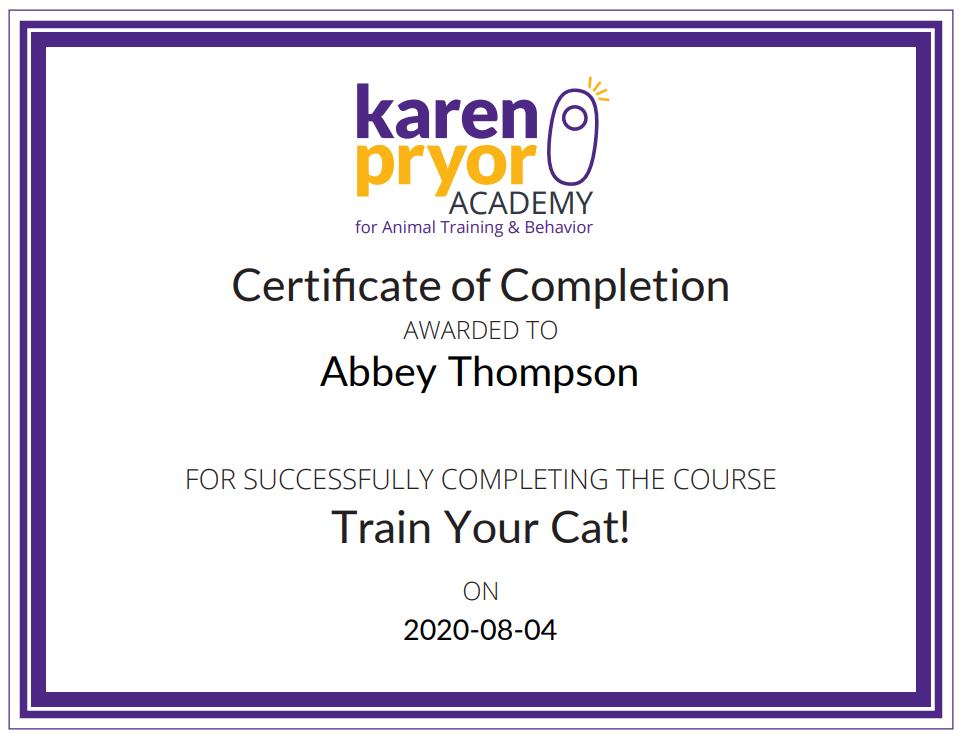
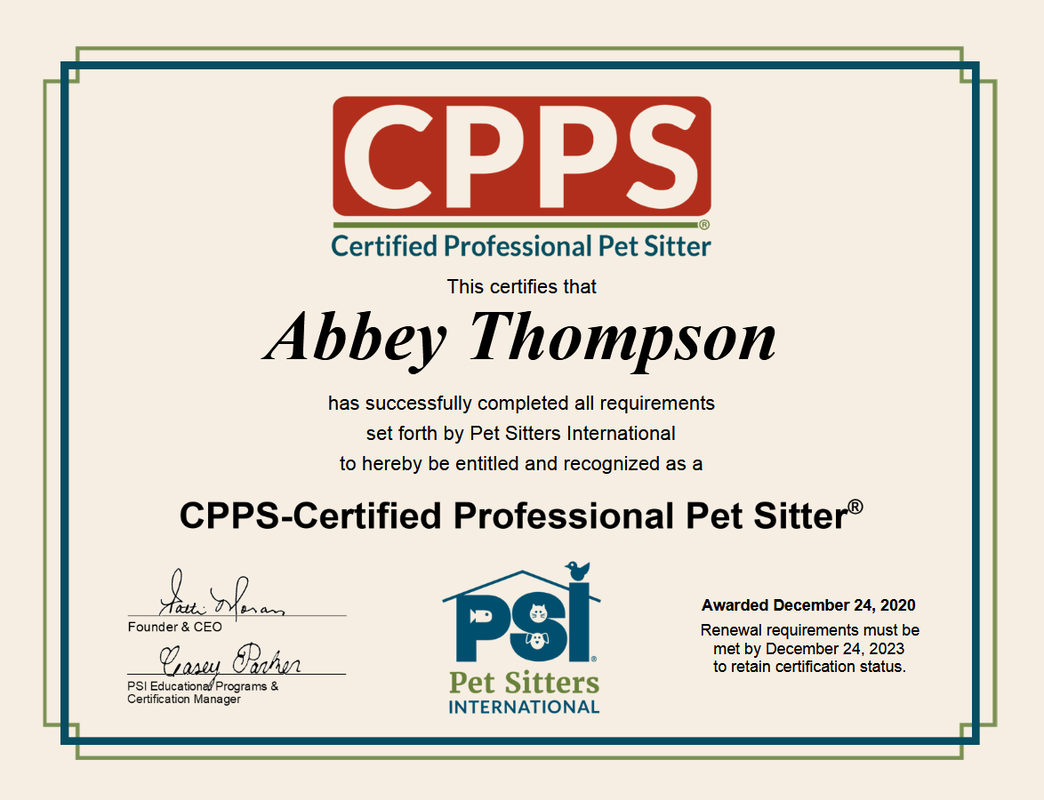
- Pawsitive Vibes Cat Behavior & Training: Mentee, 2024 - Present - Pet Professional Guild: Shelter & Rescue Division Member, Current - Scratch that: A Pawsitive Approach to Prevent Destructive Scratching Webinar, 2026 - Intercat Tension Guidelines: Recognition, Prevention, and Management Webinar, 2025 - Feline Inappropriate Elimination Master Course, Certified 2025 - 'Handle with Care LIVE' Cooperative Care and Low Stress Handling, 2025 (Karen Pryor Academy) - Animal Behavior Consulting, Intl Assoc. of Animal Behavior Consultants (IAABC), 2021 - Owner/Shelter Director at Kzoo Cat Cafe & Rescue, est 2017 - Master's Degree in Clinical Counseling Psychology, Valdosta State University, 2014 - 10+ years rescue/shelter experience, 5+ year professional pet sitting experience - Certified Professional Petsitter (CPPS) through PetSitters International, 2020 - Karen Pryor Academy for Animal Training & Behavior: Train Your Cat!, 2020 - Fear Free (Shelters) Certified, 2019 |
So how does it work?!
Animal behavioral consultation (Animal Behavior Consulting 101) often starts with a thorough history and assessment of your kitty, their environment, and your goals for them. Humans will complete a comprehensive questionnaire that will ask about many aspects of your home and your pet's lives. Filling this out (the more detail the better) can set you up for the most successful and productive initial consultation.
The initial consultation is the time for the coach to see your kitty's space, and have a conversation with you and the household about what your goals are and what concerns or questions you may have. A few initial steps will be discussed and a comprehensive written plan will be provided afterward. This PURRsonalized report will include a review of recommendations, a detailed behavior modification action plan, product recommendations and plan for follow up (if applicable). Depending on your goals and the complexity of the behavior, follow up and support will be provided via email or text and possible follow up visits, or referrals if needed.
Cat Coaching can be a way for you to help your kitty live their best life! Whether you are interested in an overall consultation of their environment, nutrition, behavior and health, or guidance on a specific unwanted behavior, we can help using our experience, education and resources. However, Cat Coaching is NOT a quick fix. Cat Coaching is not a magic wand. YOU have to be willing to help your kitty live their best life, DO your homework, and be invested in the process. There will never be a guaranteed solution, but we will work together as long as needed to help you reach your goals!
**Cat coaching is also NEVER a replacement for routine (or otherwise) veterinary care! Vet records are an important part of your initial questionnaire, and no veterinary advice will be part of your consultation.
The initial consultation is the time for the coach to see your kitty's space, and have a conversation with you and the household about what your goals are and what concerns or questions you may have. A few initial steps will be discussed and a comprehensive written plan will be provided afterward. This PURRsonalized report will include a review of recommendations, a detailed behavior modification action plan, product recommendations and plan for follow up (if applicable). Depending on your goals and the complexity of the behavior, follow up and support will be provided via email or text and possible follow up visits, or referrals if needed.
Cat Coaching can be a way for you to help your kitty live their best life! Whether you are interested in an overall consultation of their environment, nutrition, behavior and health, or guidance on a specific unwanted behavior, we can help using our experience, education and resources. However, Cat Coaching is NOT a quick fix. Cat Coaching is not a magic wand. YOU have to be willing to help your kitty live their best life, DO your homework, and be invested in the process. There will never be a guaranteed solution, but we will work together as long as needed to help you reach your goals!
**Cat coaching is also NEVER a replacement for routine (or otherwise) veterinary care! Vet records are an important part of your initial questionnaire, and no veterinary advice will be part of your consultation.
Resources:
Affiliate links and resources for some of our favorite enrichment/cooperative care items and ideas!
🐾 101 Enrichment Ideas (Pawsitive Vibes Cat Behavior & Training)
🐾 Cat School Clicker Training!
🐾 Cat School 'Parking Spot' Training!
🐾 Food Puzzles for Cats!
🐾 Cat School Clicker Training!
🐾 Cat School 'Parking Spot' Training!
🐾 Food Puzzles for Cats!
AAFP and ISFM Feline Environmental Needs Guidelines: The Five Pillars of a Healthy Feline Environment
🐾 Provide a Safe Place - For a cat, a safe place is a private and secure area, often in a raised location. These features give the cat a sense of enclosure, isolation or seclusion. A safe place is one that a cat can retreat to so that it feels protected. If the cat cannot see a potential threat, it feels safer, even if its whole body is not fully concealed. When a cat is relaxed, a safe place can also function as a resting or sleeping area.
🐾 Provide Multiple and Separated Key Environmental Resources - Key environmental resources include the feeding, drinking, toileting, claw scratching, play and resting/sleeping areas. These key resources should be available in multiple locations, either to provide separate access in multi-cat households or several choices for individual cats. Each key resource should be placed in its own location, separate from other resources
🐾 Provide Opportunity for Play and Predatory Behavior - Cats should be able to engage in pseudopredatory play and feeding behaviors. This can be achieved by providing toys, opportunities for play-based interaction with the cat owner and with other socially compatible cats, and feeding devices and practices that require the cat to actively acquire food.
🐾 Provide Positive, Consistent and Predictable Human–Cat Social Interaction - Cats are companion animals that benefit from regular, friendly and predictable social interaction with humans. Consistent and positive handling of the cat from a young age leads to positive behaviors such as reduced fear and stress and a strong human–cat bond. Social preferences among cats vary widely, and are influenced by factors such as genetics, early rearing conditions, and life experiences. Many cats prefer a high frequency, low intensity level of social contact with humans, a scenario that gives them a good deal of control. In this setting, cats are able to initiate, moderate and end their interaction with humans
🐾 Provide an Environment that Respects the Importance of the Cat’s Sense of Smell - Unlike humans, cats use olfactory and chemical information to evaluate their surroundings and maximize their sense of security and comfort. Olfactory information involves many different smells detected by the nose. Cats use olfactory and pheromonal signals through the use of scent marking by facial and body rubbing. This establishes the boundaries of their core living area in which they feel secure and safe. Wherever possible, humans should be careful not to interfere with a cat’s olfactory and chemical signals and scent profile.
🐾 Provide Multiple and Separated Key Environmental Resources - Key environmental resources include the feeding, drinking, toileting, claw scratching, play and resting/sleeping areas. These key resources should be available in multiple locations, either to provide separate access in multi-cat households or several choices for individual cats. Each key resource should be placed in its own location, separate from other resources
🐾 Provide Opportunity for Play and Predatory Behavior - Cats should be able to engage in pseudopredatory play and feeding behaviors. This can be achieved by providing toys, opportunities for play-based interaction with the cat owner and with other socially compatible cats, and feeding devices and practices that require the cat to actively acquire food.
🐾 Provide Positive, Consistent and Predictable Human–Cat Social Interaction - Cats are companion animals that benefit from regular, friendly and predictable social interaction with humans. Consistent and positive handling of the cat from a young age leads to positive behaviors such as reduced fear and stress and a strong human–cat bond. Social preferences among cats vary widely, and are influenced by factors such as genetics, early rearing conditions, and life experiences. Many cats prefer a high frequency, low intensity level of social contact with humans, a scenario that gives them a good deal of control. In this setting, cats are able to initiate, moderate and end their interaction with humans
🐾 Provide an Environment that Respects the Importance of the Cat’s Sense of Smell - Unlike humans, cats use olfactory and chemical information to evaluate their surroundings and maximize their sense of security and comfort. Olfactory information involves many different smells detected by the nose. Cats use olfactory and pheromonal signals through the use of scent marking by facial and body rubbing. This establishes the boundaries of their core living area in which they feel secure and safe. Wherever possible, humans should be careful not to interfere with a cat’s olfactory and chemical signals and scent profile.
|
Find a cat friendly vet practice here!
Go to: https://catfriendly.com/find-a-veterinary-professional/ and type in your zip code! |